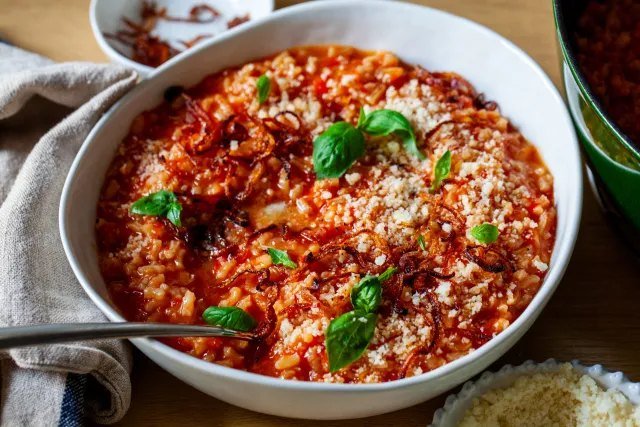
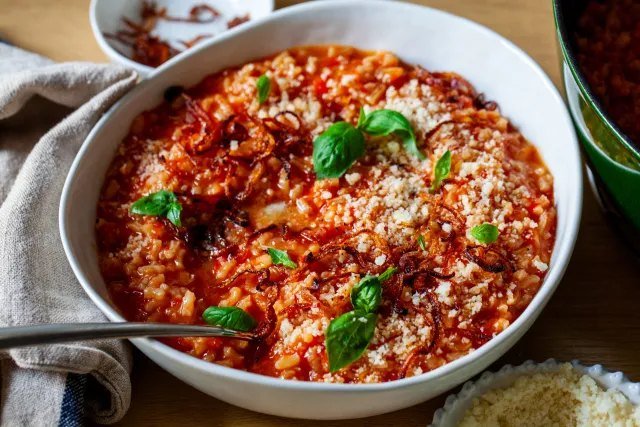
You might be holding onto the last bits of summer heat, refusing to acknowledge that autumn is creeping in. This tomato risotto recipe is the perfect bridge between the two seasons. It feels warm and comforting but isn’t heavy enough to feel like a winter stew. The addition of frizzled red onions adds a textural crunch that keeps the dish interesting from the first bite to the last.
Why This Tomato Risotto Works
Most people think risotto is complicated because of the constant stirring. In reality, it is just patience and technique. The key is using short-grain rice that absorbs liquid well. You want the starch to release slowly, creating that signature creamy consistency without adding cream. The tomato base brings a bright acidity that cuts through the richness. This balance is what makes the dish feel sophisticated yet approachable. It is a meal that looks impressive but relies on simple pantry staples.
The Importance of Warm Broth
Always keep your broth hot on the stove while you cook the rice. Adding cold liquid to hot rice shocks the grains and stops the cooking process. This leads to uneven texture and a longer cooking time. You want the rice to stay in a state of gentle simmer. The warmth helps the starch release evenly. This simple step saves you frustration and ensures a smooth final product. Do not skip this part of the preparation.
Prepping the Frizzled Onions
The frizzled red onions are the star of the show. They provide a sharp, sweet crunch that contrasts beautifully with the soft rice. You need to slice the onions paper-thin. Use a sharp knife or a mandoline for even slices. The thinner the slices, the crispier they will become. You want them to shatter slightly when you bite into them. This garnish transforms a simple rice dish into something special. It adds visual appeal and a flavor burst. Do not overcook them. They go from golden to burnt in seconds. Keep a close eye on the pan. The smell of caramelizing onion is a sign they are almost ready. Remove them immediately when they look deep amber. Let them cool on a wire rack to maintain their crispness. They will soften if left in a pile.
Avoiding Soggy Onions
The biggest mistake with frizzled onions is overcrowding the pan. If you put too many slices at once, they steam instead of fry. This results in limp, soggy onions that lose all their texture. Fry them in small batches. Give each slice enough space to crisp up. Pat the sliced onions dry with a paper towel before frying. Moisture is the enemy of crispness. This extra step ensures you get that shatter-crisp texture. It is worth the small effort. Your guests will notice the difference.
Cooking the Risotto Base
Start by toasting the rice in a bit of oil or butter. This coats the grains and helps them stay separate. Add the tomato base and stir well. The tomato should coat every grain of rice. This step builds the flavor foundation. It is not just about adding color. It is about infusing the rice with savory, acidic notes. Take your time with this stage. Do not rush the toasting process. The rice should look translucent around the edges. This indicates it is ready to absorb the liquid. The aroma will change from raw rice to something cooked and fragrant. Trust your nose as much as your eyes.
The Stirring Technique
You do not need to stir constantly. Many recipes say to stir non-stop, which is exhausting. Instead, stir when you add the liquid. Let it simmer for a minute or two. Then stir again. This allows the starch to release in waves. It creates a creamier texture with less effort. You are looking for a porridge-like consistency. The rice should be tender but still have a slight bite. This is the al dente stage. Do not overcook it. It will continue to cook from the residual heat. Taste a grain to check the texture. It should not be crunchy, but it should not be mushy either.
Finishing and Plating
Once the rice is cooked, turn off the heat. Stir in a knob of butter or a splash of oil. This adds gloss and richness. The risotto should flow slowly when you tilt the pan. It should not be dry or soupy. Adjust the consistency with a little more broth if needed. Let it rest for a minute. This allows the flavors to meld together. Now is the time to plate. Use a wide, shallow bowl to show off the texture. Spoon the risotto into the center. Top generously with the frizzled red onions. The contrast in colors is striking. The deep red of the onions against the orange-red rice looks vibrant. Add a final crack of black pepper. This dish is best served immediately. The onions will lose their crispness over time. So, plate it right before serving. It is a meal that rewards immediacy.
Common Mistake: Overcooking the Rice
Many home cooks overcook risotto because they are afraid it will be too firm. But if you keep stirring and adding liquid, it will eventually turn into glue. The goal is a creamy texture, not a thick paste. Stop adding liquid when the rice is just barely tender. The residual heat will finish the job. If you are unsure, err on the side of undercooking. You can always add a splash of water and stir, but you cannot undo overcooked rice. This is the most common error in risotto making. Keep a close watch on the last five minutes. The difference between perfect and ruined is narrow. Trust your experience. You will get the timing right with practice. Do not be afraid to taste. Your palate is the best tool you have.