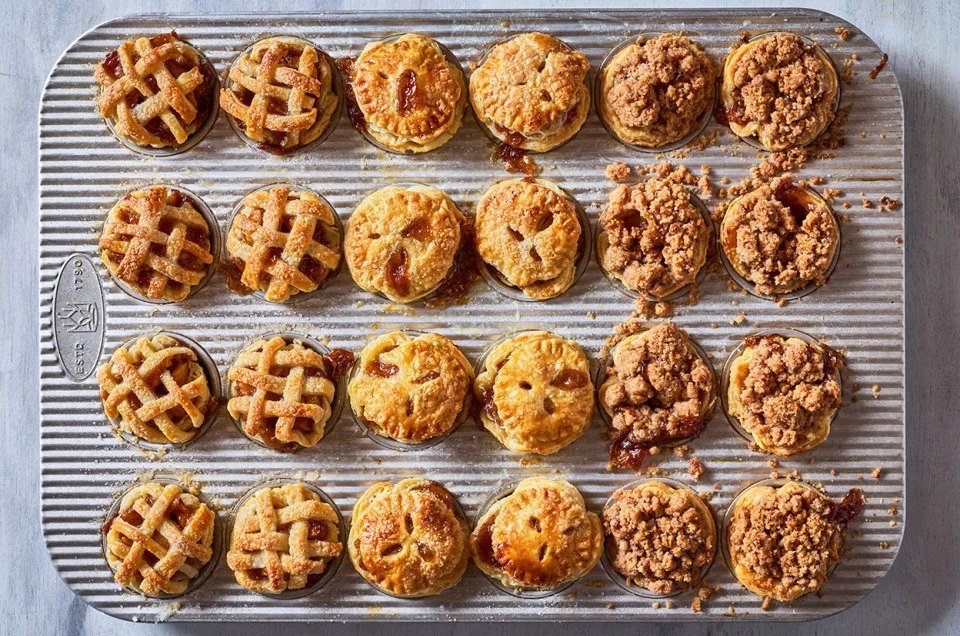
Stop stressing about choosing just one pie flavor for your holiday dinner. Making mini Thanksgiving pies is the smartest move you can make this year. It solves the problem of serving a crowd that wants variety without forcing you to bake three full-sized tarts. You get to offer apple, pumpkin, and pecan all at once, and the smaller size actually makes the baking process less intimidating. It is a simple shift in scale that changes the entire vibe of your kitchen.
Why Smaller Pies Work Better for Holidays
When you bake a standard nine-inch pie, you are committing to a large volume of filling and crust. If your apple filling is too wet or your pumpkin spice is off, you have a lot of product to fix or hide. With mini pies, the stakes are lower. You can adjust the seasoning on the second batch if the first one needs more cinnamon. This flexibility is a huge relief when you are already juggling a turkey and side dishes. It turns a high-pressure task into a manageable project.
There is also the visual appeal factor. A single large pie on the table looks traditional, but a tray of assorted mini pies looks festive and generous. Guests feel like they are getting a tasting menu rather than just a standard dessert. It invites conversation and lets people pick exactly what they crave. You avoid the awkwardness of someone asking for a slice of pecan when you only made apple.
Tip: Use Uniform Molds for Even Baking
Consistency is key when you are working with multiple small items. Use a muffin tin or a set of small tart pans that are all the same size. This ensures that every pie bakes at the same rate. If you mix and match different sized molds, some will be done while others are still raw. Stick to one type of pan for the entire batch to keep your workflow smooth. It saves you from having to check individual pies every few minutes.
Choosing Your Flavors and Fillings
The beauty of this approach is that you can mix and match flavors freely. You do not have to commit to a single dominant taste for the whole table. You can make half the batch with a classic apple filling and the other half with a rich pumpkin custard. This is perfect for households with mixed preferences. Some people love the tartness of fruit, while others prefer the creamy sweetness of custard. You satisfy everyone without compromising on quality.
Consider the texture contrast as well. A flaky crust paired with a soft filling is always a winner. For fruit pies, make sure your filling is thick enough to hold its shape in the small molds. You do not want liquid leaking out during the bake. For custard pies, ensure the filling is not too thick, or it will not set properly in the small volume. Balance is everything when you are scaling down.
Mistake: Overfilling the Small Crusts
It is easy to think that because the pies are small, you can pack them full. Do not do this. Leave a little space at the top of the crust. The filling will expand slightly as it heats up. If you fill them to the brim, you will get a mess in your oven. Aim for about three-quarters full. This gives the filling room to bubble and set without overflowing. A clean bake is a happy bake, and it makes cleanup much easier later.
Baking Tips for Perfect Mini Pies
Temperature control is critical when you are baking many small items at once. Your oven might have hot spots, so rotate the pans halfway through the baking time. This ensures that every pie gets even heat exposure. You want the crusts to be golden brown and the fillings to be set. If you are using a glass or metal pan, adjust your baking time accordingly. Metal pans conduct heat faster, so your pies might be done sooner than expected.
Let the pies cool before you serve them. This is especially important for custard-based fillings. They need time to firm up completely. If you cut into them while they are hot, the filling will be runny and messy. Give them at least twenty minutes to cool on a wire rack. This allows the structure to set and the flavors to meld together. It is a small wait that makes a big difference in the final presentation.
Step: Blind Bake the Crusts First
For custard pies, you should blind bake the crusts before adding the filling. This prevents the bottom crust from getting soggy. Line the crusts with parchment paper and fill them with pie weights or dried beans. Bake them until the edges are lightly golden. Remove the weights and bake for a few more minutes. This creates a sturdy base that can support the liquid filling. It is an extra step, but it is worth it for a professional result.
Serving and Storing Your Mini Pies
Once your pies are baked and cooled, you can arrange them on a serving platter. You do not need to do anything fancy. A simple white plate or a rustic wooden board works well. You can add a dusting of powdered sugar or a sprig of fresh thyme for garnish. Keep it simple and let the pies speak for themselves. They are already visually appealing because of their variety and size.
If you have leftovers, store them in an airtight container in the refrigerator. They will keep for up to three days. Reheat them in the oven for a few minutes before serving to restore the crispness of the crust. You can also freeze the unbaked pies for future use. Wrap them tightly in plastic wrap and foil. When you are ready to bake, just pop them in the oven. It is a great way to prep ahead for busy holidays.