
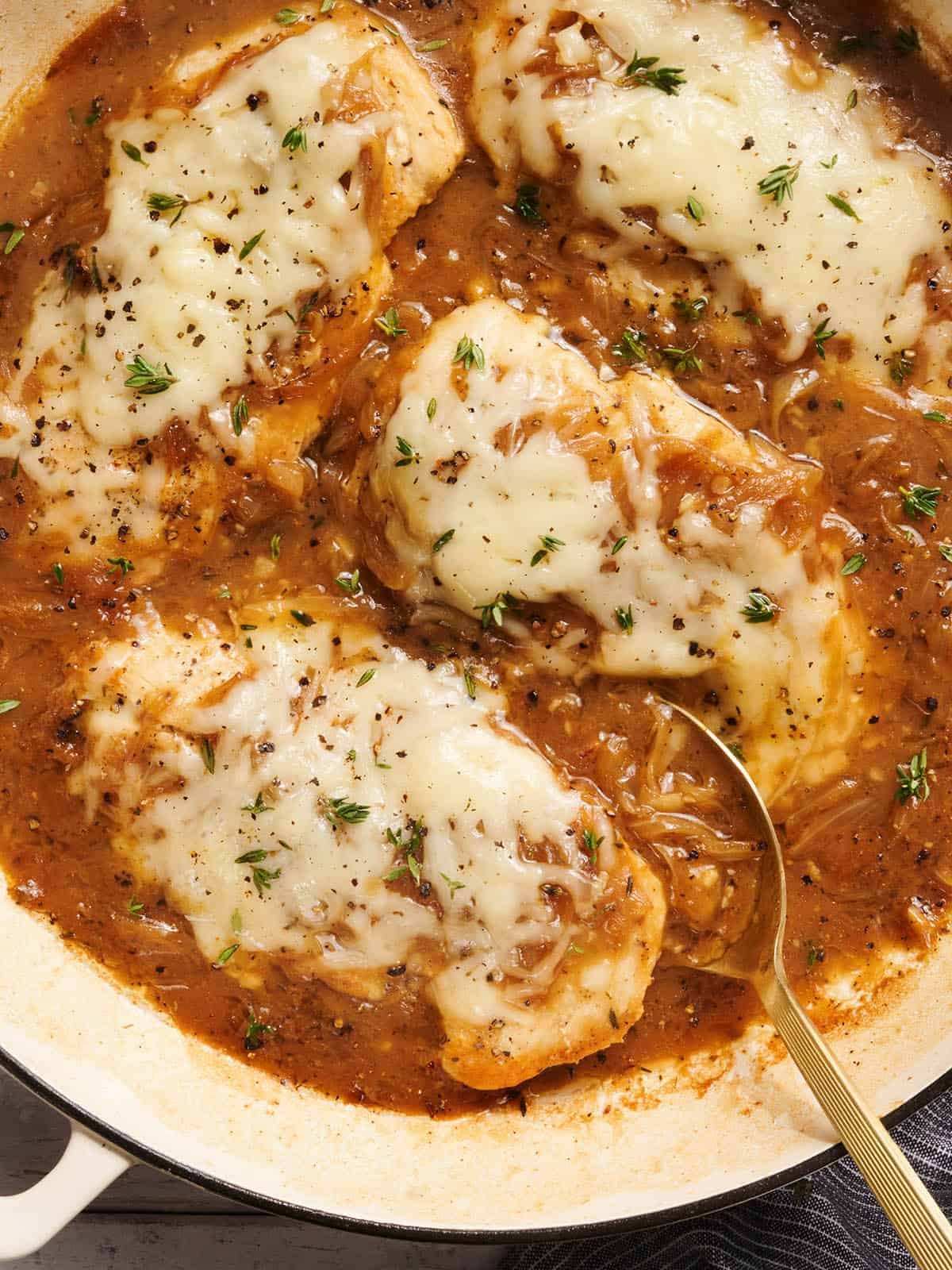
If you are craving the deep, savory taste of a classic soup but want a full meal, this French Onion Chicken is the perfect answer. It transforms those beloved soup flavors into a hearty skillet dinner that is rich, cheesy, and incredibly satisfying. You get the same comfort without the effort of making a separate soup base.
Why This Skillet Dinner Works
The magic here lies in the onions. Just like in a traditional soup, the foundation of this dish is slowly caramelizing onions until they turn deeply golden and sweet. This process takes a little patience, but it is the key to developing that complex, jammy flavor profile. Without this step, the dish would taste flat and lack the depth that makes the original soup so famous.
By using a single skillet, you keep all that flavorful liquid and browned bits together. The onions release their natural sugars, which combine with the meat juices to create a natural sauce. This method ensures that every bite of chicken is coated in that rich, savory essence. It is a simple technique that yields restaurant-quality results in your own kitchen.
Patience with Caramelization
Do not rush the onions. If you turn the heat up too high, they will burn and taste bitter. Keep the heat at a medium setting and stir them occasionally. You want them to soften and turn a deep amber color. This slow cooking process is what gives the final dish its signature sweetness and richness.
Prepping the Chicken for Flavor
To make the most of the protein, you should slice two large chicken breasts in half horizontally. This creates four thinner, more uniform pieces that cook quickly and evenly. Thinner cutlets are less likely to dry out, which is crucial when you are simmering them in a liquid. This preparation step also allows the meat to absorb more of the surrounding gravy.
Using boneless, skinless breasts keeps the cost down while providing a tender texture. You are not trying to make a roasted whole bird here; you are making a quick weeknight dinner. The goal is juicy, golden-seared pieces that hold up well against the strong flavor of the onions and cheese. This approach makes the meal accessible for anyone looking for a fast, delicious option.
Checking the Temperature
Always use a meat thermometer to ensure safety and juiciness. Remove the chicken from the skillet as soon as the thickest part reaches 165°F. If you leave it in too long, the thin slices will become dry and tough. A quick check takes only seconds and guarantees a perfect result every single time.
Building the Rich Gravy
Once the chicken is seared and set aside, you build the heart of the dish. You will use flour and butter to create a roux, which thickens the liquid and adds a nutty flavor. Then, you pour in beef broth, dried thyme, and a splash of balsamic vinegar. The acidity from the balsamic is vital because it balances the heavy sweetness of the caramelized onions.
This combination creates a savory, complex gravy that clings to the chicken. The thyme adds an herbal note that is distinctly French, while the beef broth provides a deep, meaty background. It is not a light sauce; it is a substantial, comforting base that turns the chicken into the star of the show. The result is a dish that feels far more expensive than the ingredients actually are.
Balancing Sweet and Savory
Do not skip the balsamic vinegar. It might seem like an odd addition to a chicken dish, but it is essential. It cuts through the richness of the butter and cheese. Without it, the dish can taste cloying or overly sweet. This small addition brings the entire flavor profile together in a harmonious way.
Finishing with Melted Cheese
The final step is where the dish truly shines. You return the chicken to the skillet and cover it with a generous layer of Swiss cheese. While traditional recipes often call for Gruyère, Swiss is a budget-friendly alternative that melts just as beautifully. It provides that gooey, stretchy texture that makes you want to eat it immediately.
Pop a lid on the skillet and let the cheese melt until it is bubbly and golden. You do not need to turn on the oven for this step. The residual heat from the stovetop is enough to melt the cheese into a perfect crust. This keeps the energy usage low and the cooking time short. It is a clever way to get a gratéed finish without the hassle of a full oven bake.
Choosing the Right Cheese
Swiss cheese is the ideal choice here for both flavor and cost. It has a mild, nutty taste that complements the strong onion flavor without overpowering it. It also has a high melt factor, which means it becomes smooth and creamy rather than stringy or oily. Stick to a standard block of Swiss for the best results and the best value.