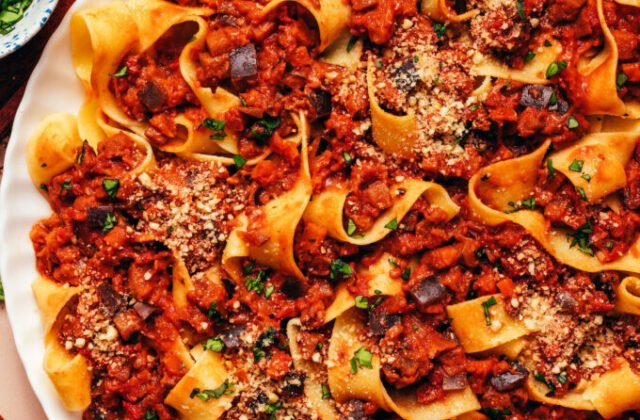
There is nothing quite like a sauce that feels rich without being heavy, especially when the heat outside makes you want lighter meals. This easy eggplant bolognese is the perfect solution for those late summer evenings when you crave comfort food that does not feel like a burden. You get all the bold, Italian-inspired flavors you love, but the eggplant adds a creamy texture and a brightness that keeps the dish fresh. Best of all, the entire process happens in a single pot, which means less washing up and more time to enjoy your meal.
Why This One-Pot Method Works
Cooking in one pot is not just about saving time; it is about building flavor. When you sauté the aromatics and cook the eggplant in the same vessel, the fond and juices stay in the sauce. This creates a deeper, more complex base than if you used separate pans. The eggplant acts as a thickener, absorbing the tomato and herbs while releasing its own moisture. This results in a sauce that clings to the pasta perfectly without needing heavy cream or excessive cheese. It is a technique that rewards patience and attention to detail.
The Secret to Soft Eggplant
- Cut the eggplant into small, uniform cubes to ensure even cooking.
- Salting the cubes for twenty minutes draws out excess moisture, preventing a watery sauce.
- Pat the cubes dry thoroughly before adding them to the hot pan.
- Do not crowd the pan; cook in batches if necessary to get a good sear.
Building the Flavor Base
The foundation of any great bolognese is the soffritto, the aromatic base of onions, garlic, and sometimes carrots. For this version, we focus on letting those aromatics soften completely before adding the tomato. This step is crucial because it caramelizes the natural sugars, adding a sweetness that balances the acidity of the tomatoes. You want the onions to be translucent and fragrant, not burnt. This slow start sets the tone for the entire dish, ensuring that every bite is layered with depth. It is a small step that makes a huge difference in the final taste.
Choosing the Right Tomatoes
While canned tomatoes are convenient, fresh tomatoes in late summer can elevate the flavor profile significantly. Look for ripe, red tomatoes that yield slightly to pressure. If you cannot find fresh ones, use high-quality canned San Marzano tomatoes for the best results. The key is to allow them to break down and simmer with the other ingredients. This melds the flavors together, creating a cohesive sauce rather than a disjointed mix of ingredients. The acidity of the tomatoes cuts through the richness of the eggplant beautifully.
Simmering for Depth
Once all the ingredients are in the pot, the next step is to let the sauce simmer. This is where the magic happens. The heat should be low and steady, allowing the flavors to meld and intensify. You want the sauce to reduce slightly, thickening up as it cooks. This process concentrates the flavors and creates a richer texture. It is not a rush job; give the sauce at least twenty to thirty minutes to develop its full character. The aroma filling your kitchen is a sign that the dish is coming together perfectly. Trust the process and resist the urge to check too often.
Avoiding a Watery Sauce
One common mistake is not letting the sauce reduce enough before serving. If your sauce looks thin, turn up the heat slightly and let it boil for a few minutes. This evaporates excess liquid and helps the sauce cling to the pasta. Another tip is to ensure your eggplant is well-drained before adding it to the pot. Excess moisture from the eggplant can prevent the sauce from reducing properly. Patience during the simmering stage is key to achieving that creamy, cohesive texture you are aiming for.
Serving and Finishing Touches
When it is time to serve, toss the cooked pasta directly into the pot with the sauce. This allows the starch from the pasta to mix with the sauce, creating an emulsion that coats every strand. Add a splash of pasta water if the sauce seems too thick. Finish with a handful of fresh basil and a sprinkle of parmesan cheese for extra flavor. The contrast of the fresh herbs against the warm, savory sauce is delightful. This dish is best enjoyed immediately, while it is hot and fresh. It is a simple yet satisfying meal that leaves you feeling full and happy.
Pairing with Wine
A light red wine pairs well with this dish, such as a Chianti or a Sangiovese. The acidity in the wine complements the tomatoes in the sauce. If you prefer white, a crisp Vermentino from Sardinia is a great choice. The herbal notes in the wine match the basil in the dish. Whatever you choose, make sure it is served chilled to refresh the palate between bites. The combination of food and drink enhances the overall dining experience. Take your time and savor each sip along with the meal.