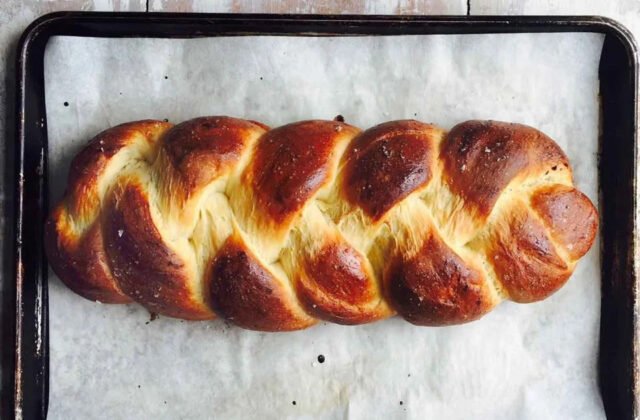
If you have ever pulled a loaf of challah out of the oven only to see ugly tears running down the sides, you are not alone. These unsightly lines are what bakers call “stretch marks,” and they are a common frustration for home bakers. While they do not change the taste or texture of the bread, they definitely ruin the visual appeal of your centerpiece. The good news is that challah stretch marks are usually caused by a few specific handling errors that are easy to correct. By understanding how the dough behaves, you can ensure your next loaf comes out with a flawless, professional-looking finish.
Understanding Why Tears Happen
Challah is a rich, enriched dough filled with eggs, milk, butter, and sugar. This combination makes the gluten network more delicate than what you would find in a standard white sandwich loaf. When the dough is handled too roughly, the gluten strands snap instead of stretching, creating those visible breaks. Often, the problem starts during the kneading phase or when the dough is divided. If the dough is sticky because the humidity is high or the hydration is slightly off, it becomes even more prone to tearing as you try to shape it. It is not a sign that your recipe is bad, but rather a signal that your technique needs a small adjustment to respect the delicate nature of the enriched dough.
Check Your Dough Temperature
One of the most overlooked factors is the temperature of your ingredients. If your eggs or milk are too cold, the butter in the dough will solidify, making the dough stiff and resistant to stretching. Conversely, if the dough is too warm, the butter melts out, making the dough slack and weak. You want a dough that is pliable but holds its shape. Aim for your liquid ingredients to be at room temperature before mixing. This ensures the fat is distributed evenly and the gluten develops smoothly. A slightly cooler dough is generally easier to handle without tearing than one that is too warm and sticky.
Techniques for Handling Enriched Dough
The way you manipulate the dough during shaping is critical. Many bakers rush the braiding process, pulling the strands too hard or unevenly. Challah dough requires a gentle touch. You should not be stretching the dough to fit the braid; instead, you should be adjusting the amount of dough in each strand to match the others. If one strand is too short, it will pull on the adjacent strands, creating tension that leads to tears. Use a light dusting of flour on your work surface to prevent sticking, but do not overdo it. Excess flour can dry out the surface of the dough, making it brittle and more likely to crack when you pull it.
Rest the Dough Before Shaping
Allowing the dough to rest for ten to fifteen minutes after dividing it can work wonders. This rest period relaxes the gluten, making the dough more extensible. When you try to braid immediately after dividing, the gluten is still tight and under tension. By giving it a brief break, you allow the proteins to relax, which means you can stretch the strands without them snapping back or tearing. Cover the dough with a damp towel or plastic wrap during this time to prevent the surface from drying out. This simple step saves a lot of frustration and results in a smoother braid.
Preventing Tears During Braiding
When you start braiding, keep your movements slow and deliberate. Do not yank the strands upward; instead, let them glide over one another. If you feel resistance, stop and check if the dough is too tight. You can gently stretch the strand with your palms to ease it into place. It is also helpful to keep a small bowl of warm water nearby. If a strand starts to tear, you can lightly dampen your fingers and smooth the area to help the dough re-adhere. However, the best prevention is consistent tension. Try to maintain the same level of pull on all three strands. Uneven tension is the primary culprit behind most stretch marks.
Use the Right Tools
While your hands are essential, having the right tools can make a difference. A sharp bench scraper is invaluable for dividing the dough cleanly without dragging and tearing the base. If you are using a rolling pin, ensure it is clean and dry. A slightly damp rolling pin can help prevent sticking without adding too much water to the dough. Some bakers find that using a piece of parchment paper to roll out the dough makes transferring it to the braiding board easier and less stressful for the dough structure. The goal is to minimize the amount of force you need to apply to shape the loaf.
Fixing Issues After Baking
If you have already baked a loaf with stretch marks, do not throw it away. The bread is still delicious and perfectly safe to eat. You can slice it thickly for sandwiches or toast it for a crunchy texture. The visual flaw is the only downside. For future loaves, remember that patience is key. Enriched doughs are less forgiving than lean doughs, so give them the time and gentle handling they need. If you continue to struggle, consider reducing the amount of butter or sugar slightly in your recipe, as this can make the dough stronger and less prone to tearing. However, most issues are purely technical rather than chemical. Focus on your handling, keep your ingredients at the right temperature, and you will see a dramatic improvement in your results. Your next loaf of challah can be as beautiful as it is tasty, free from those distracting lines.