Learning how to clean cast iron is much easier than most people assume, and you certainly do not need to baby your pans as much as the myths suggest. With just a little bit of hot water and a gentle touch, you can keep your heavy-duty skillets and Dutch ovens ready for your next meal without stripping away that precious seasoning you have worked so hard to build.
The Basics of Daily Maintenance
When you finish cooking, the best time to address your pan is while it is still warm, but not scalding hot. You should never let your cast iron soak in the sink for hours, as this can lead to rust and damage the surface. Instead, give it a quick rinse under hot water to remove any loose food particles or grease.
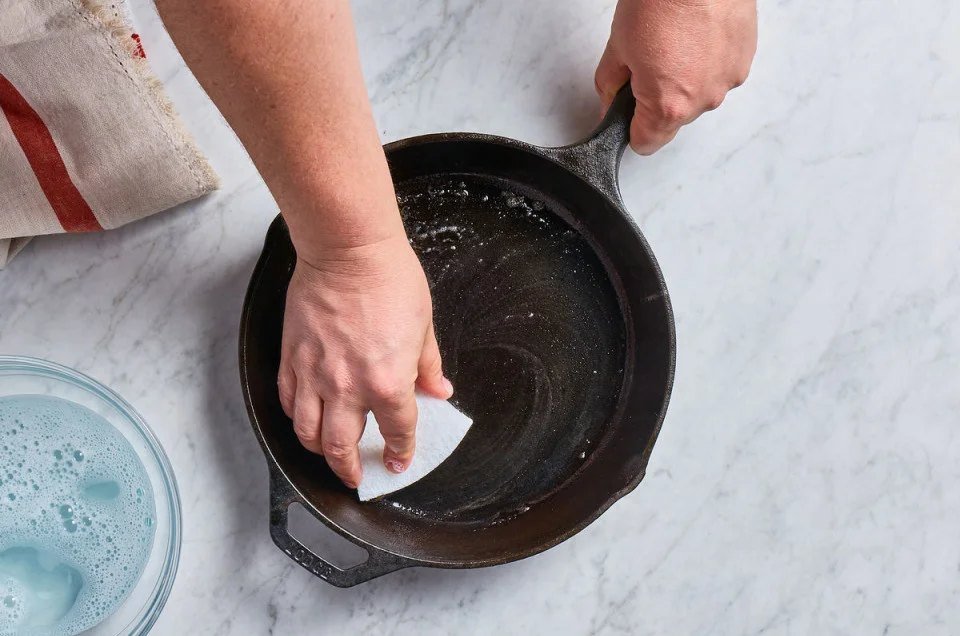
If you have stubborn bits of food stuck to the bottom, a simple plastic scraper or a stiff-bristled brush works wonders. You do not need to use harsh chemicals or steel wool, which can be far too abrasive for the seasoned finish. A little bit of elbow grease with a nylon brush is usually all it takes to get the surface clean again.
Dry your pan immediately
After rinsing, you must dry the pan thoroughly to prevent rust from forming on the iron. I like to place my skillet back on the stove over low heat for a minute or two to ensure every drop of moisture evaporates. If you just leave it in the dish rack, you might find a spot of orange rust by the next morning.
Removing Tough Baked-On Residue
Sometimes, you might end up with a layer of burnt food that just won’t budge with a simple rinse. In these cases, you can use a small amount of kosher salt as a mild abrasive to scrub the surface. Pour a tablespoon of salt into the pan and use a folded paper towel to rub it firmly against the stuck-on spots.
The salt acts like a gentle exfoliant that lifts the food without damaging the seasoning layer underneath. Once you have scrubbed the area, dump out the salt and rinse the pan with warm water. This method is incredibly effective for those times when you accidentally leave the heat on a little too long while searing a steak.
Avoid the dishwasher at all costs
It might be tempting to toss your pan in the dishwasher for a deep clean, but you should never do this. The harsh detergents and the intense heat of the drying cycle will strip your seasoning and likely cause the iron to rust almost instantly. Stick to hand washing to keep your cookware in top condition for a lifetime of use.
Maintaining the Seasoning Layer
Once your pan is clean and bone-dry, it is a good idea to apply a very thin layer of oil to protect the surface. Use a paper towel to rub a tiny amount of neutral oil, such as grapeseed or vegetable oil, over the entire interior of the pan. You want the surface to look shiny but not greasy to the touch.
If you leave too much oil in the pan, it can become sticky or gummy the next time you heat it up. If you accidentally add too much, just use a clean paper towel to wipe away the excess until the pan looks matte. This quick step keeps the iron protected from moisture in the air and ensures your pan stays non-stick.
Store your pans properly
When you are ready to put your skillet away, try to store it in a dry place where it can breathe. If you stack your cast iron pans on top of each other, place a paper towel between them to prevent scratching and to absorb any stray moisture. Keeping them in a dry cupboard will save you from having to re-season them frequently.
Common Questions About Cast Iron Care
Many home cooks worry that they are doing something wrong if their pan isn’t perfectly black, but a little variation in color is completely normal. As long as the surface is smooth and food isn’t sticking, you are doing a great job. Don’t stress if your pan looks a bit different than the ones you see in professional kitchens.
If you do notice a small patch of rust, don’t panic because it isn’t the end of the world. You can simply scrub the rusty spot with a bit of steel wool, rinse it, dry it, and then re-season that area with a light coating of oil. It takes only a few minutes to restore your pan to its former glory and get back to cooking.
Use a light touch with soap
There is an old rumor that you should never use soap on cast iron, but a tiny drop of mild dish soap is actually fine for everyday cleaning. The key is to use it sparingly and rinse it away quickly so it doesn’t sit on the surface. You don’t need to scrub it with soap every single time, but it won’t ruin your pan if you use a little bit after cooking something particularly fragrant or greasy.