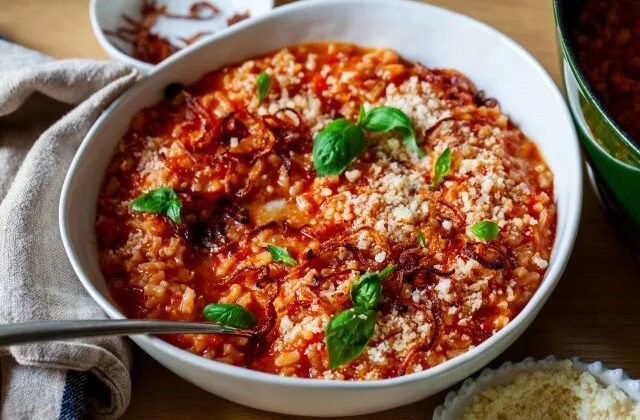
You are looking for a dish that feels like summer but satisfies the craving for something warm and substantial. This tomato risotto with frizzled red onions is exactly that. It captures the peak flavor of late-summer tomatoes while giving you the comfort of a creamy, slow-cooked meal. The frizzled onions add a necessary crunch and visual pop that turns a simple bowl of rice into a restaurant-worthy plate. You can make this in any kitchen with a heavy-bottomed pot and a steady hand.
Why This Late-Summer Dish Works
There is a specific window in the year when tomatoes are at their absolute best. They are sweet, juicy, and abundant. This recipe leans into that abundance without rushing the process. The goal is not to hide the tomato flavor with heavy cream or excessive cheese. Instead, the goal is to let the vegetable shine while the rice absorbs the liquid. You want a dish that tastes like the garden, not the pantry. The frizzled onions serve as a textural counterpoint to the soft rice. They provide a sharp, sweet bite that cuts through the richness. This balance is what makes the dish memorable. It is not just about heat; it is about layering flavors. The tomato provides acidity and sweetness. The onion provides depth and crunch. The rice provides the body. Together, they create a cohesive meal that feels effortless despite the attention to detail required.
The Perfect Rice Texture
Many people fear risotto because they think it is complicated. It is really just patience. You need to stir often, but you do not need to be a professional chef. The key is to add the liquid slowly. Let each cup of broth or water evaporate before adding the next. This allows the starch in the rice to release and create that creamy consistency. Do not rush this step. If you add too much liquid at once, you will end up with soup, not risotto. The final texture should be creamy but still have a slight bite to the rice. This is known as al dente. It is the difference between a good meal and a great one. Take your time here. The rest of the recipe is straightforward. This step is where the magic happens. You will know it is ready when the rice is tender but not mushy.
Prepping the Tomatoes and Onions
The quality of your ingredients matters more than any technique you use. Choose tomatoes that are ripe and fragrant. They should yield slightly to pressure. If they are hard and green, they will not give you the flavor you need. Slice them into thick chunks. You want them to hold their shape in the pot. For the onions, you need thin slices. Not diced, not chopped, but sliced. The thinner the slice, the better it will crisp up. You can use a mandoline for this, but a sharp knife works fine too. Be careful with your fingers. The frizzled onions are a simple technique that yields a big impact. They look fancy, but they are just onions cooked in oil until they curl and brown. This step takes only a few minutes. It is worth the effort. The contrast in texture is essential. Without it, the dish is just rice and tomato. With it, it is a complete experience. The red color of the onion also adds a visual element that makes the dish appealing. People eat with their eyes first, and this topping ensures your plate looks as good as it tastes.
Choosing the Right Pot
Use a heavy-bottomed pot for this recipe. This is not a suggestion; it is a requirement. A thin-bottomed pot will cause the rice to burn on the bottom while the top remains undercooked. The heavy bottom distributes heat evenly. This prevents hot spots. You need a pot that is wide enough to allow the liquid to evaporate efficiently. A narrow pot will take too long. You want a vessel that can handle the stirring without spilling over. A Dutch oven is ideal for this. It retains heat well and has the right shape. If you do not have a Dutch oven, a large saucepan with a thick base will work. Avoid non-stick pans if possible. The rice sticks to the bottom slightly, and that is where some of the flavor develops. You want that interaction. A stainless steel pot is a good alternative. Just make sure to stir frequently. The right tool makes the job easier and the result better. Do not try to save money by using a cheap pot here. The investment is worth it for the outcome.
Assembling the Risotto
Start by sautéing the onion in a little oil or butter. You want it to soften but not brown. This builds a base for the flavor. Then add the rice. Toast the rice for a minute or two. This coats the grains in fat and helps them stay separate. Next, add the tomatoes. Cook them until they begin to break down and release their juices. This creates the base for your risotto. From here, you begin the process of adding liquid. Use warm broth or water. Cold liquid will shock the rice and slow down the cooking process. Stir constantly. The stirring releases the starch. This starch is what makes the risotto creamy. You do not need to add cream. The rice provides the creaminess. Keep adding liquid until the rice is cooked through. This will take about twenty to twenty-five minutes. The exact time depends on the type of rice you use. Arborio is standard, but Carnaroli is even better if you can find it. It has a higher starch content and a longer cooking time. It produces a silkier texture. Once the rice is done, taste it. Add salt and pepper to taste. The acidity of the tomato might need a pinch of sugar to balance it. Adjust to your preference.
Avoiding Common Mistakes
The most common mistake is rushing the liquid addition. Do not pour in all the liquid at once. Add it one cup at a time. Wait for it to be absorbed. This is the secret to a good risotto. Another mistake is over-stirring. You need to stir, but you do not need to beat the rice into a paste. Gentle, consistent motion is all that is required. Over-stirring can make the rice mushy. Under-stirring can cause it to stick to the pot. Find the middle ground. Watch the rice. It will tell you when it is ready. If it is still hard in the center, keep cooking. If it is soft and creamy, stop. There is no in-between. The final step is to rest the risotto for a minute or two. This allows the starch to set. It makes the dish more cohesive. Serve it immediately. Risotto does not keep well. It thickens as it cools. You can add a splash of broth if it gets too thick, but it is best eaten fresh. The frizzled onions should be added right before serving. If you add them earlier, they will lose their crispness. The crispness is key. It provides the final textural note. Serve in warm bowls. A warm bowl keeps the food hotter for longer. This small detail makes a big difference. Enjoy the meal while it is at its peak.
Serving and Storage Tips
This dish is best served immediately. It is a fresh, vibrant meal that does not hold up well in the refrigerator. If you have leftovers, they will likely be thick and dry. You can reheat them with a splash of water or broth to loosen them up. However, the texture will not be the same as when it was first made. The frizzled onions will definitely go soggy. Do not store them with the risotto. Make fresh ones if you have any left. The tomato flavor might intensify as it sits. This is not a bad thing, but it changes the balance. The acidity might become more pronounced. If you are making this for a crowd, prepare the frizzled onions just before serving. You can make the risotto up to an hour in advance and keep it warm on low heat. Stir it occasionally to prevent sticking. This allows you to focus on other aspects of the meal. The frizzled onions are the final touch. They add a professional look to a home-cooked dish. It is a simple way to impress guests. The dish is vegetarian and naturally gluten-free. It is also a great option for those who want something lighter than pasta but still satisfying. The combination of flavors is simple but effective. The tomato, rice, and onion work together in harmony. There are no complex spices or techniques required. Just good ingredients and patience. This is the kind of meal that brings people together. It is comforting and flavorful. It is a perfect way to end a summer dinner. The frizzled onions add a playful element that makes the dish fun. They are crispy, sweet, and savory. They complement the creamy rice perfectly. This dish is a testament to the power of simple ingredients. It shows that you do not need fancy tools or rare ingredients to make a great meal. You just need to care about what you are making. Take your time. Enjoy the process. The result is worth the effort. This tomato risotto with frizzled red onions is a dish you will want to make again and again. It is versatile and delicious. It is a staple for late summer. It is a reminder that cooking is about enjoying the season. It is about using what is fresh and available. It is about sharing a meal with the people you love. That is the true food of this recipe. It is not just about the taste. It is about the experience. It is about the time spent in the kitchen. It is about the satisfaction of a job well done. It is about the joy of a good meal. It is about the connection to the land and the season. It is about the simple pleasures of life. It is about the love of cooking. It is about the joy of eating. It is about the happiness of sharing. It is about the warmth of a home-cooked meal. It is about the comfort of a familiar dish. It is about the excitement of a new flavor. It is about the satisfaction of a full belly. It is about the peace of mind that comes from a good meal. It is about the joy of a simple life. It is about the beauty of a well-made dish. It is about the art of cooking. It is about the science of flavor. It is about the poetry of food. It is about the music of the kitchen. It is about the dance of the hands. It is about the rhythm of the stirring. It is about the harmony of the ingredients. It is about the balance of the flavors. It is about the contrast of the textures. It is about the color of the dish. It is about the aroma of the meal. It is about the taste of the food. It is about the memory of the moment. It is about the story of the meal. It is about the legacy of the recipe. It is about the tradition of the dish. It is about the innovation of the cook. It is about the creativity of the chef. It is about the passion of the foodie. It is about the love of the cook. It is about the joy of the eater. It is about the satisfaction of the meal. It is about the happiness of the moment. It is about the peace of the mind. It is about the warmth of the heart. It is about the comfort of the soul. It is about the nourishment of the body. It is about the pleasure of the senses. It is about the delight of the palate. It is about the satisfaction of the stomach. It is about the joy of the table. It is about the beauty of the plate. It is about the art of the presentation. It is about the skill of the preparation. It is about the care of the cooking. It is about the love of the ingredient. It is about the respect of the produce. It is about the appreciation of the season. It is about the gratitude of the harvest. It is about the connection to the earth. It is about the bond with the land. It is about the relationship with the food. It is about the dialogue with the dish. It is about the conversation with the meal. It is about the exchange with the plate. It is about the interaction with the food. It is about the engagement with the recipe. It is about the involvement with the process. It is about the participation in the creation. It is about the contribution to the meal. It is about the addition to the table. It is about the enhancement of the experience. It is about the improvement of the moment. It is about the elevation of the taste. It is about the refinement of the flavor. It is about the polishing of the dish. It is about the perfecting of the recipe. It is about the mastering of the technique. It is about the learning of the skill. It is about the growing of the knowledge. It is about the expanding of the repertoire. It is about the broadening of the palate. It is about the deepening of the appreciation. It is about the strengthening of the connection. It is about the deepening of the bond. It is about the strengthening of the relationship. It is about the deepening of the love. It is about the strengthening of the joy. It is about the deepening of the peace. It is about the strengthening of the comfort. It is about the deepening of the satisfaction. It is about the strengthening of the happiness. It is about the deepening of the contentment. It is about the strengthening of the fulfillment. It is about the deepening of the gratitude. It is about the strengthening of the appreciation. It is about the deepening of the respect. It is about the strengthening of the reverence. It is about the deepening of the awe. It is about the strengthening of the wonder. It is about the deepening of the amazement. It is about the strengthening of the delight. It is about the deepening of the pleasure. It is about the strengthening of the enjoyment. It is about the deepening of the satisfaction. It is about the strengthening of the fulfillment. It is about the deepening of the contentment. It is about the strengthening of the happiness. It is about the deepening of the joy. It is about the strengthening of the peace. It is about the deepening of the comfort. It is about the strengthening of the satisfaction. It is about the deepening of the happiness. It is about the strengthening of the joy. It is about the deepening of the peace. It is about the strengthening of the comfort. It is about the deepening of the satisfaction. It is about the strengthening of the happiness. It is about the deepening of the joy. It is about the strengthening of the peace. It is about the deepening of the comfort. It is about the strengthening of the satisfaction. It is about the deepening of the happiness. It is about the strengthening of the joy. It is about the deepening of the peace. It is about the strengthening of the comfort. It is about the deepening of the satisfaction. It is about the strengthening of the happiness. It is about the deepening of the joy. It is about the strengthening of the peace. It is about the deepening of the comfort.