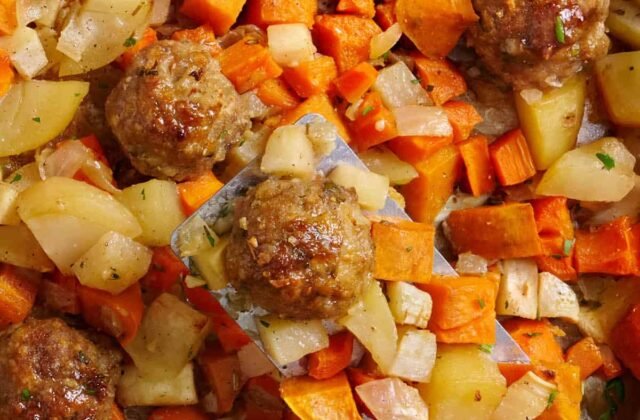
Stop scrolling if you are looking for a dinner that actually tastes like you spent all day in the kitchen. These Sheet Pan Turkey Meatballs with Root Vegetables are the kind of meal that saves your sanity on a busy Tuesday. You get tender, juicy meatballs and caramelized veggies all on one tray. It is messy in the best way, but the cleanup is minimal. This is the ultimate crowd-pleaser that feels like a special occasion without the stress.
Why This One-Pan Method Works
The secret to a great one-pan dinner is timing. You want everything to be done at the same moment, not having some parts burnt while others are raw. By cutting your carrots, potatoes, sweet potato, and parsnips into evenly sized pieces, you ensure they soften and cook through right alongside the meat. This is where the texture game happens. The root vegetables provide a sturdy base for the meatballs to rest on, preventing them from getting soggy. Instead, they sit on a bed of starchy goodness that soaks up all that delicious glaze. It is a simple trick that changes the entire texture of the dish.
Another huge factor is the heat distribution. A large rimmed baking sheet allows for even airflow around every piece of food. If you crowd the pan, you will steam your vegetables instead of roasting them. Give the meatballs and veggies some breathing room. You want those edges to crisp up while the centers stay tender. This method is perfect for using up leftover produce that might be hanging out in your crisper drawer.
Key Tip: Uniform Sizing
Do not skip the step of cutting your vegetables into similar sizes. A thick chunk of parsnip takes much longer to cook than a thin slice of carrot. If you throw them in random shapes, you will end up with a mess of overcooked and undercooked bits. Aim for pieces that are roughly one to two inches in diameter. This consistency is what makes the one-pan concept actually work for dinner service.
The Secret to Juicy Turkey Meatballs
Turkey meat can be dry if you are not careful. Lean proteins do not have the fat content of beef or pork to keep them moist on their own. That is why we use cottage cheese in this recipe. It sounds strange to most people, but it is a game-changer for texture. The cottage cheese adds moisture and richness right into the meat mixture. It also boosts the protein content, which is a nice bonus for those counting macros. The result is a meatball that feels incredibly tender when you bite into it.
We are also skipping the egg here. Usually, eggs act as a binder in meatballs. But in this case, the combination of cottage cheese and panko breadcrumbs does the job perfectly. The panko adds a light, airy texture that contrasts with the dense meat. It helps the mixture hold together without becoming dense or rubbery. You want these meatballs to be pillowy, not tight. This egg-free approach is actually easier to mix by hand because the texture is more manageable.
Common Mistake: Overworking the Meat
When you mix your meatball ingredients, do not be aggressive. If you knead the turkey like it is bread dough, you will make the meatballs tough. Just stir until the ingredients are evenly distributed. You want to see the panko and cottage cheese incorporated, but you do not want to compress the air out of the mixture. Gentle mixing is the key to that tender interior. Trust the process and keep your hands light.
Building the Flavor with a Glaze
Roasted vegetables and plain meatballs are good, but a glaze makes them great. This recipe uses a simple combination of butter, maple syrup, Dijon mustard, and garlic. It sounds like a lot of ingredients, but it is just a few spoonfuls of each. The maple adds sweetness, the Dijon adds tang, and the garlic adds depth. The butter helps the glaze coat the food evenly without sticking to the pan in a bad way. It creates a sticky, caramelized surface that looks professional and tastes even better.
You apply this glaze halfway through the cooking process. After the first twenty minutes of roasting, you pull the pan out and brush the mixture over the meatballs and vegetables. Then, you send it back to the oven for another ten to twelve minutes. This second round of heat allows the sugars in the maple syrup to caramelize. It turns that simple glaze into a rich, glossy coating. The flavors meld together during this short time, creating a complex taste profile that is hard to beat.
Step: When to Add the Glaze
Timing is everything here. Do not add the glaze at the very beginning, or it will burn. Do not add it at the very end, or it will just sit on top without integrating. The sweet spot is after the vegetables have started to soften and the meatballs have browned slightly. Brush it on generously. You want every single piece of food to have a chance to get coated. This step is non-negotiable for the best flavor profile.
Budget-Friendly and Flexible
One of the best things about this dish is that it is affordable. We are talking about a cost of roughly nine dollars for four full meals. That is a steal for a dinner that feels like a restaurant meal. You are using basic pantry staples and seasonal vegetables that are usually cheap. The turkey provides the protein, and the root vegetables fill you up without costing a fortune. It is a smart way to eat well without breaking the bank.
This recipe is also incredibly flexible. If you do not have parsnips, swap in more potatoes or carrots. If you have butternut squash, use that instead of sweet potato. The key is to pick vegetables that have a similar roasting time. You can also tweak the seasonings to suit your taste. Add some red pepper flakes for heat, or some fresh thyme for an herbal note. The structure of the dish remains the same, but you can make it your own. It is a template for a perfect weeknight dinner that you will want to repeat all year long.