If you want to know how to achieve smooth buttercream frosting on your cakes, you have to tackle those pesky air bubbles first. When we spend hours baking a gorgeous layer cake, the last thing we want is a pocket of trapped air ruining our crisp edges and clean piping work. Meringue-based styles taste incredible and hold their shape, but they love to trap air during the whipping process. Let’s walk through how to fix this common issue so your next cake looks like it came straight from a professional bakeshop.
Why Air Bubbles Ruin Your Frosting
Air bubbles hide inside your mixing bowl and wait until you are halfway through decorating to ruin your finish. When you drag your spatula across the cake or squeeze a piping bag, those hidden pockets pop and leave tiny holes in your surface. Meringue-based recipes like Italian or Swiss styles rely heavily on incorporated air to build their volume, but that same air becomes our enemy during the final smoothing stage. If you do not knock the air out, your finish looks spongy instead of silky.
The Paddle Attachment Secret
Switch your mixer attachment the second your meringue buttercream finishes coming together. Swap that wire whip for a standard flat paddle attachment on your stand mixer. The paddle does not pump new air into the mixture; instead, it gently pushes and presses the existing fluff against the sides of the bowl. Run your mixer on the lowest possible speed for a few minutes with this paddle. You will hear the sound change as the large pockets of air finally pop and escape the bowl.
Mastering the Paddle Technique
Getting rid of air does not happen by accident; it requires a bit of patience at the mixer. Once you make the switch to the paddle attachment, let the machine run on low speed for at least five minutes. Do not be tempted to crank up the speed to rush the process. High speeds will only whip fresh air right back into your lovely butter mixture. Keep a close eye on the texture as the blades press the mass inward. You will notice the matte, fluffy look slowly transform into a dense, glossy sheen.
Manual Spatula Smoothing
Take your bowl off the mixer stand once the machine-stirring is complete. Grab a sturdy silicone spatula and work the frosting by hand against the sides of the bowl. Push the mixture firmly outward with the flat side of your tool to force out any stubborn micro-bubbles. This old-school arm workout aligns the fat molecules and gives you that ultra-smooth consistency we all chase. It only takes a minute or two of vigorous hand-scraping to make a noticeable difference in your texture.
Applying Frosting to Your Cake
Now that your mixture is silky and dense, you are ready to tackle the cake layers. Slap a generous scoop of your prepared spread onto the top and push it outward toward the edges. Use a long offset spatula held at a slight angle to guide the material without gouging your baked sponge. Keep your hand relaxed and move the turntable smoothly while your spatula stays relatively still. If you spot a tiny bubble surface while you work, gently pop it with the tip of your spatula and smooth right over the spot.
Temperature Trouble
Watch your room temperature closely while you work with meringue-based buttercreams. If your kitchen is too hot, the butter melts slightly and traps even more air in sloppy pockets. If the room is freezing cold, your butter chunks up and refuses to blend into a cohesive sheet. Keep your ingredients at a comfortable room temperature before you start whipping anything in the bowl. A balanced thermal environment prevents structural breakdown and keeps your finish looking pristine.
Troubleshooting Piped Details
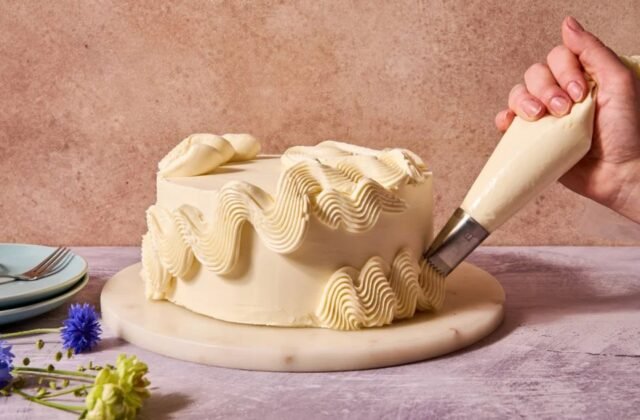
Decorating with a piping bag brings a whole new set of challenges regarding trapped air. When you spoon your spread into the bag, you often scoop in air pockets right along with it. Squeeze your filled bag gently over the mixing bowl before attaching any decorative tips to push out hidden gaps. Twist the top of the bag tightly to maintain constant pressure as you pipe borders or flowers. If a burst of air hits your star tip halfway through a shell border, stop, twist the bag tighter, and resume your motion.
Fixing Rough Surfaces
Do not panic if you finish coating a tier and notice a few surface imperfections staring back at you. Dip your metal spatula into a tall glass of hot water, wipe it completely dry with a clean towel, and gently glide it over the surface. The residual heat from the warm metal softens the outer layer just enough to let you buff out any lingering marks. Take your time, keep your tools clean, and enjoy the process of turning out a gorgeous homemade dessert.